The Short Answer
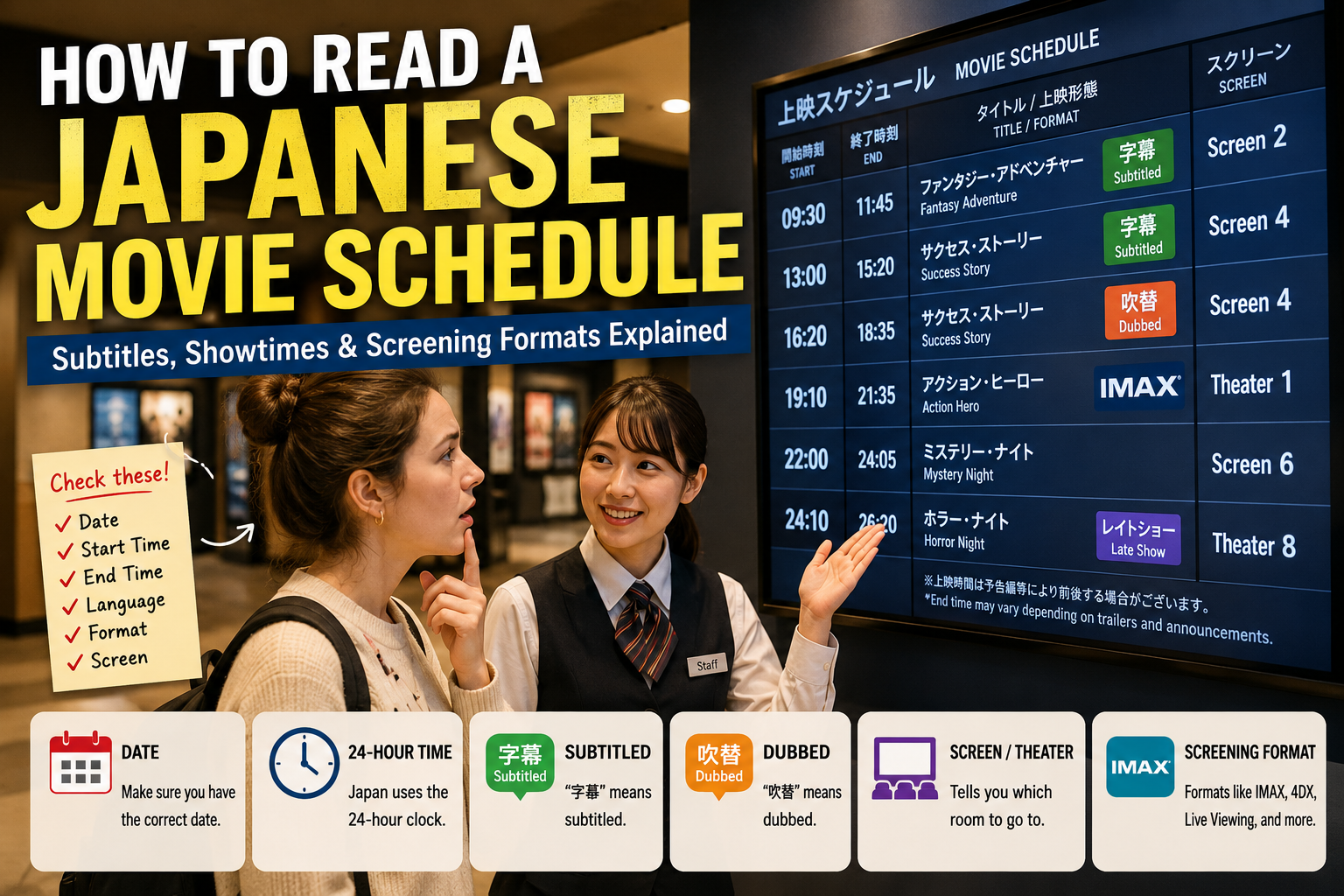
Japanese movie schedules can look confusing at first.
You may see multiple showtimes, screening formats, language options, and screen numbers all listed together.
The good news is that once you understand a few key terms, reading a Japanese movie schedule becomes much easier.
The main things to check are:
- Date
- Start time
- End time
- Language
- Screening format
- Screen number
Check the Language First
One of the most important things to check is whether the movie is subtitled or dubbed.
Common labels include:
- 字幕 = Subtitled
- 吹替 = Dubbed
This is especially important for international visitors, since choosing the wrong version can completely change your movie experience.
For more details, see our guide: Do Japanese Movie Theaters Have English Subtitles?
Japan Uses 24-Hour Time
Japanese movie theaters usually display showtimes using the 24-hour clock.
Examples:
- 09:30 = 9:30 AM
- 13:00 = 1:00 PM
- 21:40 = 9:40 PM
This can be confusing if you are used to AM/PM formatting.
Late-night screenings can be even more confusing.
You may see times such as:
- 24:05
- 25:15
These refer to times after midnight.
For example:
- 24:05 = 12:05 AM (next day)
- 25:15 = 1:15 AM (next day)
Be especially careful when booking late-night screenings, since the date can be easy to misunderstand.
Check Both Start Time and End Time
Many major Japanese theater chains display both the start time and the scheduled end time.
Example:
- Start: 18:30
- End: 20:55
This makes it easier to plan your day, especially if you need to catch a train or attend another activity afterward.
However, actual ending times may vary slightly depending on trailers, advertisements, or special announcements.
Screen and Theater Numbers
Movie schedules also tell you which auditorium your movie will play in.
You may see labels such as:
- Screen 1
- Screen 5
- Theater 3
The wording varies depending on the theater company, but the meaning is basically the same.
It tells you which room your movie is showing in.
Check the Screening Format
Japanese schedules often include special screening formats.
Examples include:
- IMAX
- Dolby Cinema
- 4DX
- MX4D
- ScreenX
You may also see special event screenings such as:
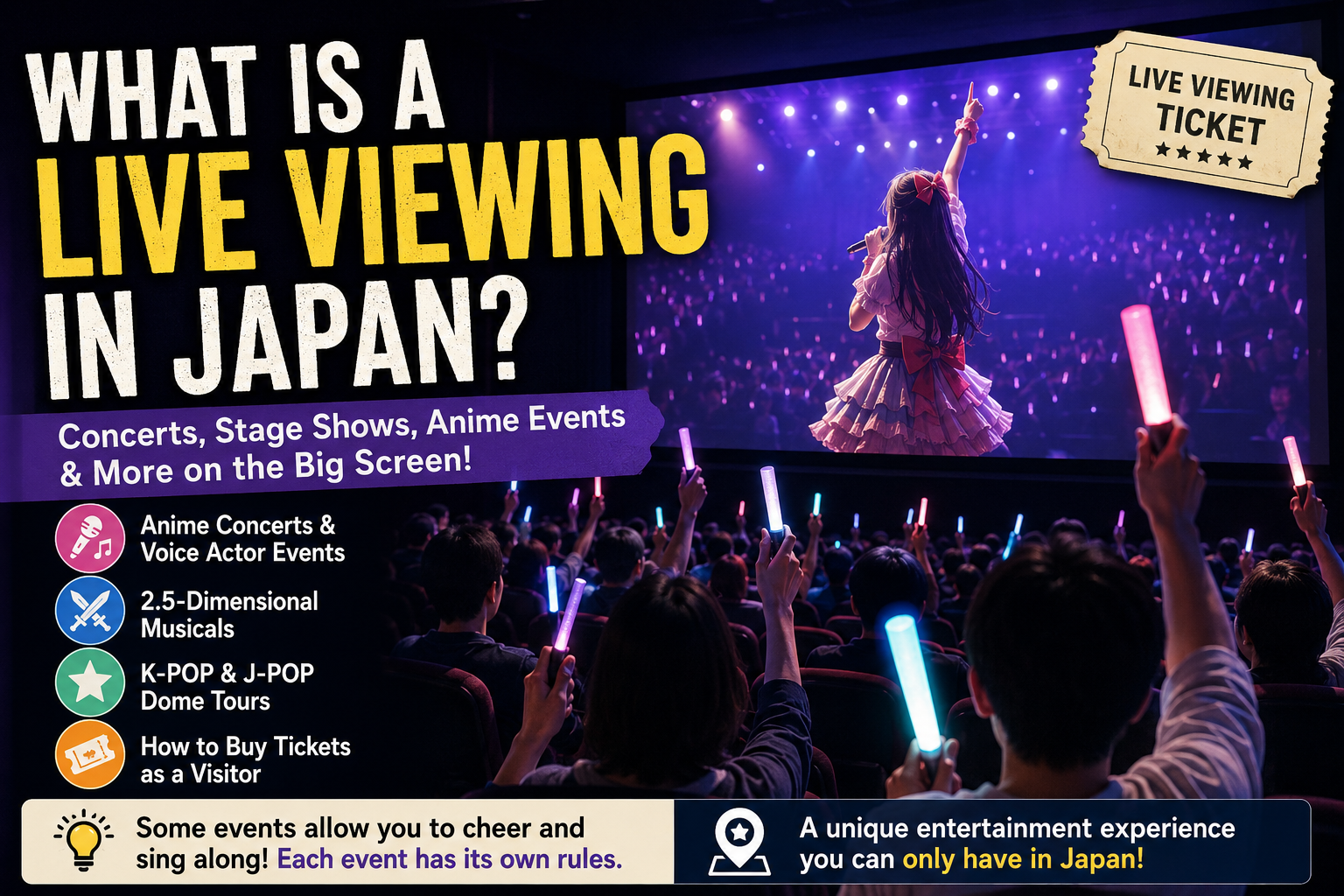
- Live Viewings
- Cheer Screenings
These screenings may follow different rules, pricing, or audience etiquette.
For more details, see our guide: What Types of Screenings Exist in Japan?
Some Screenings Have Special Rules
Not every screening works the same way.
Certain screenings may have:
- Different ticket prices
- Different audience rules
- Special event restrictions
This is especially common for live viewings, special events, and premium screenings.
Always read the screening details carefully before purchasing tickets.
For more details, see our guide: Why Do Some Movies Have Different Ticket Prices?
Always Double-Check Before Buying
Before purchasing your ticket, make sure you confirm:
- The correct date
- Start time
- End time
- Language version
- Screening format
- Screen number
Taking a few extra seconds to check these details can help you avoid mistakes and make your movie experience much smoother.
コメント