If you plan to watch a movie in Japan, you may notice ratings like G, PG12, R15+, and R18+.
If you are unfamiliar with Japanese movie ratings, these labels can be confusing.
This guide explains what each rating means and how movie age restrictions work in Japan.
The Short Answer
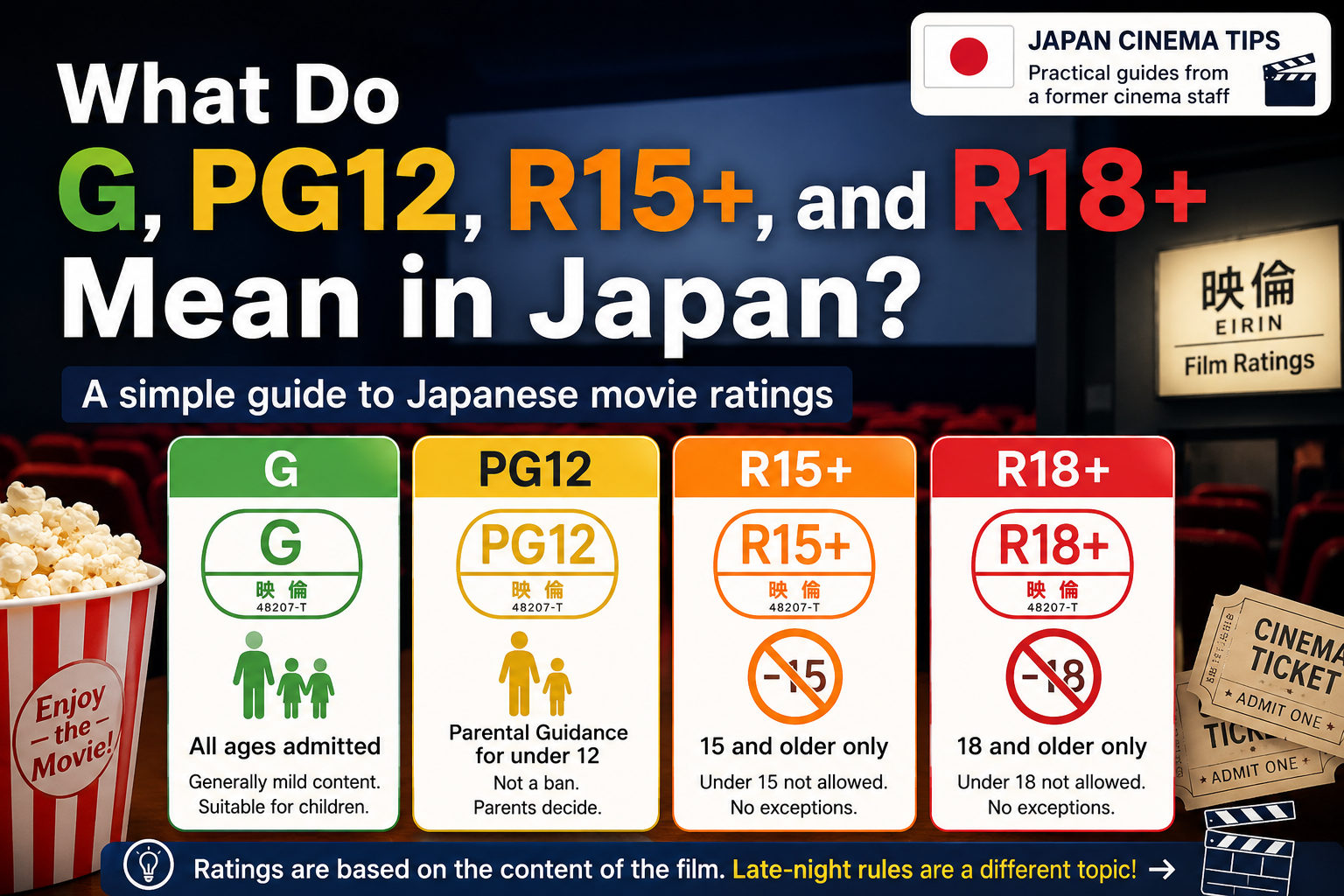
Japan uses four main movie ratings: G, PG12, R15+, and R18+.
G means the movie is suitable for all ages.
PG12 means parental guidance is recommended for children under 12.
R15+ means viewers under 15 are not allowed.
R18+ means viewers under 18 are not allowed.
Some ratings are recommendations, while others are strict age restrictions.
How Movie Ratings Work in Japan
Movie ratings in Japan are assigned to each film, not to movie theaters.
In other words, theaters do not decide the rating themselves.
Most films shown in Japanese theaters are reviewed by the Film Classification and Rating Organization (Eirin), Japan’s official film rating organization.
Ratings are based on factors such as violence, sexual content, language, and other sensitive material.
Because ratings are assigned to the movie itself, the same rating applies nationwide across Japan.
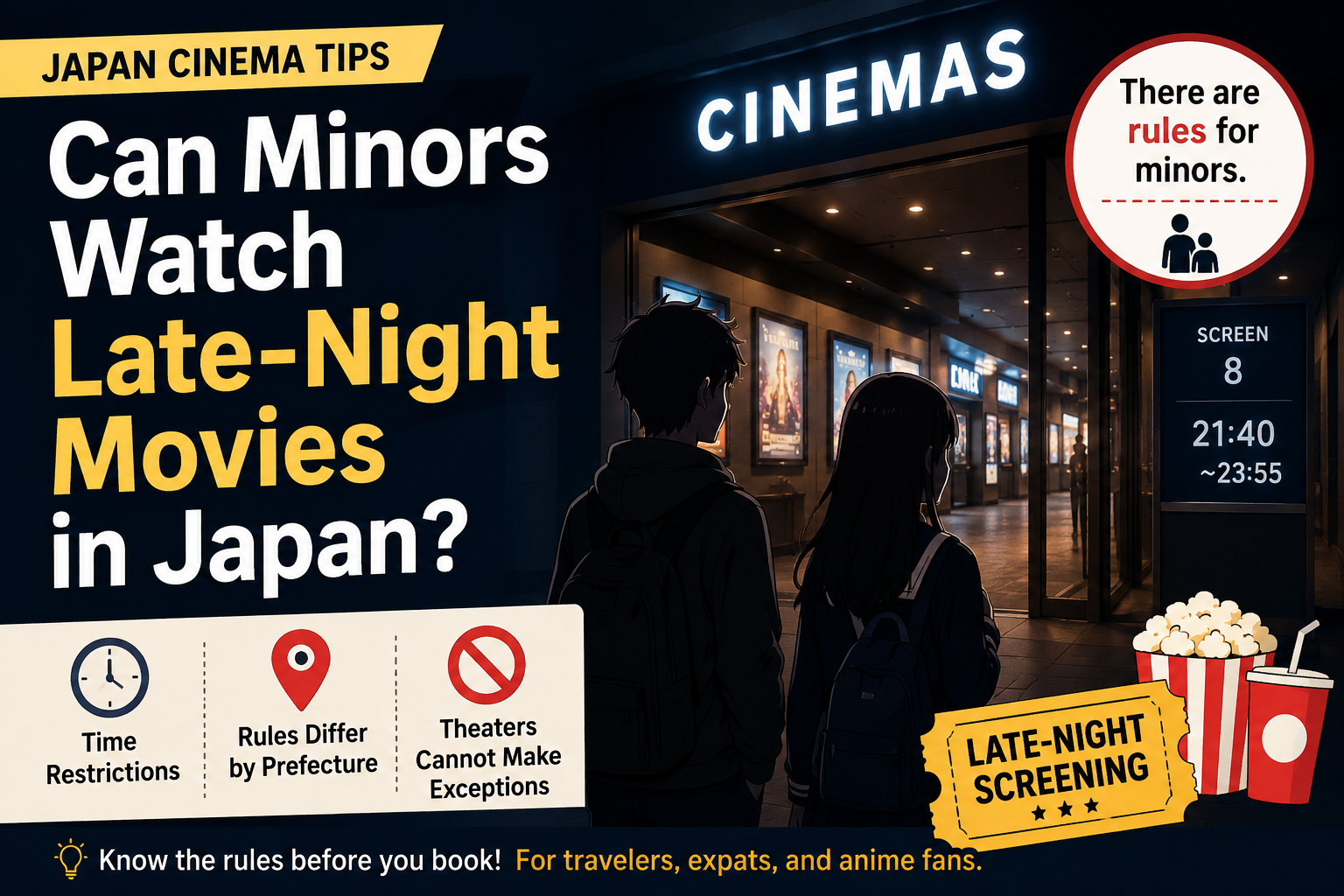
These movie ratings are separate from late-night entry restrictions, which depend on local rules.
What G Means
G stands for General Audience.
This means the movie can be watched by people of all ages.
Movies in this category are considered suitable for children, including younger viewers.
However, this does not always mean the movie is made only for children.
Some G-rated films may still include mild depictions of violence, crime, or other sensitive themes, as long as they are handled carefully.
What PG12 Means
PG12 stands for Parental Guidance for children under 12.
This rating does not mean children under 12 are banned from watching the movie.
They are still allowed to watch it.
However, parental guidance is recommended because the movie may contain content that could be too intense or unsuitable for younger children.
This may include stronger violence, disturbing scenes, or other sensitive material.
Parents or guardians are expected to decide whether the movie is appropriate.
What R15+ Means
R15+ means the movie is restricted to viewers aged 15 and older.
This is a strict age restriction.
Viewers under 15 are not allowed to watch the movie, even if they are with a parent or guardian.
Movies in this category may contain strong violence, disturbing scenes, sexual content, or other mature themes.
What R18+ Means
R18+ means the movie is restricted to viewers aged 18 and older.
This is the strictest movie rating in Japan.
Viewers under 18 are not allowed to watch the movie, even if they are with a parent or guardian.
Movies in this category may contain very strong violence, explicit sexual content, or other highly mature themes.
Movie Ratings and Late-Night Rules Are Different
One important thing to understand is that movie ratings and late-night rules are separate.
Movie ratings are based on the content of the film.
Late-night rules are based on local laws and depend on the time and location.
For example, a G-rated movie may still have late-night entry restrictions for minors if the screening ends late at night.
If you want to learn more about late-night movie rules for minors in Japan, check out my detailed guide here.
Final Thoughts
Understanding movie ratings in Japan can help you choose the right film and avoid confusion at the theater.
Before booking tickets, it is always a good idea to check the movie’s rating in advance.
This is especially helpful if you are visiting Japan with children or teenagers.